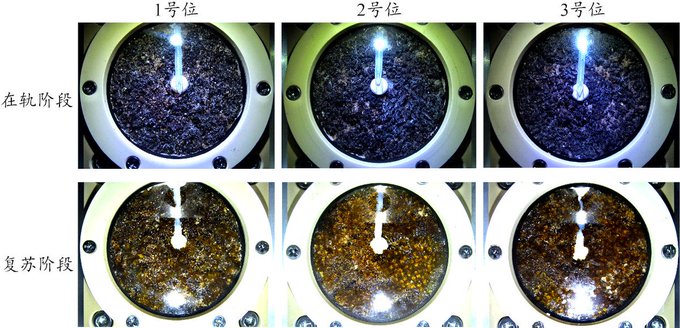
On the outer skin of the International Space Station, tiny moss spores spent 283 days in conditions where temperatures swing from minus 150 to plus 120 degrees, where there is no atmosphere and where ultraviolet radiation strikes without any protection. Returning to Earth, more than 80 percent of the spores germinated and formed normal plants. This is the first confirmed case of a multicellular plant surviving such a long stay in open space and retaining the ability to reproduce.
The experiment was conducted by Japanese scientists with the model species Physcomitrium patens — a common earth moss that is also known on Earth for its ability to colonize bare soil areas. The spores were placed in natural protective envelopes — sporangia. It was this envelope, as ground tests and the flight showed, that absorbed harmful ultraviolet radiation and preserved the genetic material. Without it, survival dropped to almost zero.
On Earth, mosses are among the first plants to colonize land about half a billion years ago. They survived all mass extinctions because they can enter a state of complete desiccation and then revive at the first contact with water. The space experiment showed that these ancient mechanisms work beyond the atmosphere. Apparently, evolution on our planet created cells capable of withstanding conditions that never existed here.
For future missions to the Moon or Mars, this opens practical prospects. Mosses grow quickly, produce oxygen, and can serve as a basis for closed life support systems. The Japanese team is already planning longer exposures — up to several years. However, it is important to understand: the success of moss does not negate the fragility of Earth's biosphere. It only reminds us how unique the conditions are in which life on our planet arose and was preserved.
In everyday life, we rarely think that the green coating on old tiles or in forest shade is the descendants of organisms capable of surviving vacuum and radiation. Their resilience is the result of millions of years of "training" in the harshest corners of Earth: in Antarctica, on volcanic fields, in deserts. Space only confirmed what was already inherent here.
The study was published in the journal iScience and is based on real samples that returned to Earth in 2023. The data show high survival even under full exposure to space factors, except for ultraviolet, from which sporangia protected effectively.
By caring for Earth's ecosystems, we preserve not only familiar nature but also potential "building blocks" for life beyond it.