


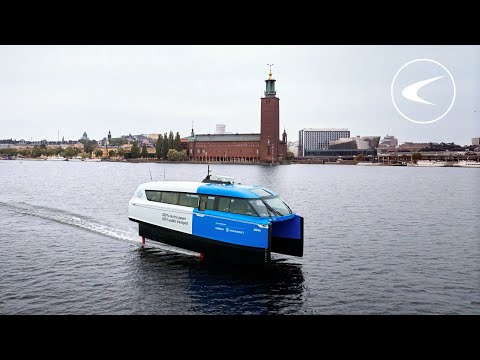
تطور شركة Candela السويدية عبّارات كهربائية ذات أجنحة غاطسة، وفي مقدمتها طراز Candela P-12 الذي صُمم ليكون جزءاً من وسائل النقل العام الحضري. وتكاد هذه السفن «تطير» فوق الماء فعلياً؛ فعند التسارع، ترفع الأجنحة الغاطسة الهيكل، وتتحرك العبّارة دون إحداث أمواج تقريباً وبصمت شبه تام، بسرعة تبلغ حوالي 25 عقدة (نحو 46 كم/ساعة).
ما الذي يجعل Candela P-12 متميزاً؟
- مزيج من الأجنحة والكهرباء: عند تجاوز السرعة حوالي 18 عقدة، ترفع الأجنحة الغاطسة الهيكل، مما يقلل من مقاومة الماء بنسبة 80% تقريباً ويخفض استهلاك الطاقة بشكل حاد.
- الدفع الكهربائي: تعمل العبّارة بالبطاريات، دون إطلاق انبعاثات ضارة في الغلاف الجوي أو تسريب وقود أو زيوت في الماء. وهذا يجعلها حلاً صديقاً للبيئة للمسارات الحضرية والساحلية.
- التحكم الآلي: تقوم أجهزة الكمبيوتر والمستشعرات والبرمجيات بتغيير زاوية الأجنحة حتى 100 مرة في الثانية، مما يحقق استقرار السفينة ويخفف من حدة التمايل. وهذا يجعل الرحلات أكثر راحة بكثير ويقلل من خطر الإصابة بدوار البحر.
- صُمم طراز Candela P-12 ليتسع لـ 25–30 راكب (حسب التجهيزات)، ويصل إلى سرعة عبور تبلغ حوالي 25 عقدة، ويمكنه قطع مسافة تناهز 40 ميلاً بحرياً (حوالي 74 كم) بشحنة واحدة. ويعد هذا النموذج ملائماً للمسارات الحضرية القصيرة، وللركاب المتنقلين يومياً، وللربط بين الضواحي ومراكز المدن الكبرى.
- الاقتصاد والبيئة: لماذا نحتاج إلى ذلك؟
- أقل تكلفة من الديزل: بفضل خفض استهلاك الطاقة، تعلن Candela عن تقليص تكاليف «الوقود» بنحو 80% مقارنة بالعبّارات التقليدية التي تعمل بالديزل. وهذا يقلل من النفقات التشغيلية ويجعل المسارات المائية أكثر جاذبية للسلطات المحلية والإقليمية.
- ضجيج أقل وضرر أخف على الشواطئ: نظراً لغياب المحركات الصاخبة وضعف الأمواج الناتجة، ينخفض التلوث الضوضائي وتآكل الخط الساحلي، وهو أمر بالغ الأهمية للمناطق الساحلية والسياحية الحساسة.
تورد الشركة بالفعل طراز Candela P-12 إلى المملكة العربية السعودية والنرويج وعدد من الدول الأخرى؛ وفي عام 2026 طلبت النرويج أكبر أسطول في العالم من العبّارات الكهربائية ذات الأجنحة الغاطسة، والذي يضم حوالي 20 سفينة.
عودة الناس إلى الماء
يؤكد هاسيلسكوغ، رئيس شركة Candela، أن الممرات المائية هي أقدم أشكال النقل، لكنها تراجعت إلى المرتبة الثانية في العقود الأخيرة. وتعد العبّارات الكهربائية «الطائرة» محاولة لدمج المسارات المائية في أنظمة النقل الحضري الحديثة.
الفكرة بسيطة:
- بدلاً من عبّارتين أو ثلاث عبّارات في اليوم، يتم تسيير عدة رحلات مكوكية تنطلق كل 10–15 دقيقة، لتكون بمثابة بديل مائي للحافلة الحضرية أو المترو؛
- يمكن للراكب القدوم إلى الرصيف دون الحاجة إلى الاطلاع على الجدول الزمني، واستقلال العبّارة التالية من طراز P-12، بما في ذلك كبديل للرحلات القصيرة بالسيارة عبر الازدحام المروري.
بالنسبة لأوروبا، لا تزال هذه العملية أبطأ؛ فبسبب إجراءات الشراء المعقدة والقرارات السياسية، يسير التنفيذ بوتيرة أبطأ مما هو عليه في آسيا والولايات المتحدة. ومع ذلك، فإن الإمكانات كبيرة، لا سيما بالنسبة للمدن التي تضم أنهاراً وخلجاناً ومضايق بحرية، حيث يمكن تخفيف الازدحام على الطرق وتقليل الانبعاثات.
الإنتاج والمستقبل
تعمل شركة Candela على زيادة الإنتاج في ستوكهولم، كما تخطط لإنشاء مصنع جديد في بولندا لتلبية الطلب وتوسيع حضورها في أوروبا وخارجها. وتعتزم الشركة زيادة عدد موظفيها من حوالي 250 إلى 1000 موظف، مما يشير إلى الانتقال من المرحلة التجريبية إلى صناعة متكاملة للنقل المائي الكهربائي.
وهكذا، فإن طراز Candela P-12 ليس مجرد «قارب رائع»، بل هو أحد العناصر الممكنة للتنقل الحضري المستدام؛ فهو يجعل النقل المائي أسرع وأكثر هدوءاً وأقل تكلفة وأكثر رفقاً بالبيئة، مما يعيد الناس إلى الماء، ولكن بمفهوم جديد يعتمد على الكهرباء.


