



In the Gurbantunggut Desert in northwestern China grows a moss that is unbothered by what destroys most living things: near-total desiccation, frost down to minus one hundred and ninety-six degrees, and powerful gamma radiation. Recently it emerged that its endurance does not end at the Earth's surface: after a flight in low Earth orbit, this moss returned to life.
The species Syntrichia caninervis was discovered by scientists from the Xinjiang Institute of Ecology and Geography of the Chinese Academy of Sciences during the Third Xinjiang Scientific Expedition, a large-scale project that China's Ministry of Science and Technology launched in 2021. The plant is no rarity here: it is this moss that, more often than others, forms the biological soil crusts of the desert, that is, it holds down the sand and gives life to the soil where there is almost none.
Laboratory tests showed how finely tuned its protection is. The moss is capable of losing more than 98% of the water in its cells without dying, and after rehydration it returns to a green color in literally two seconds. Freezing in liquid nitrogen is no death sentence for it either: in experiments it withstood such immersion for up to 30 days and then came back to life.
With radiation the picture is similar, but the figures differ from one study to another. For humans, a dose of about 50 gray is considered lethal, while the moss, according to review sources, tolerates roughly 500 gray. In an article in the journal The Innovation, its half-lethal dose is estimated at about 5000 gray. The exact value depends on the methodology, so it should be read as a guide rather than as a final record.
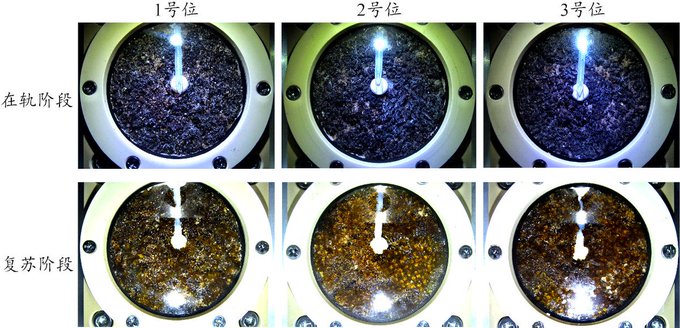
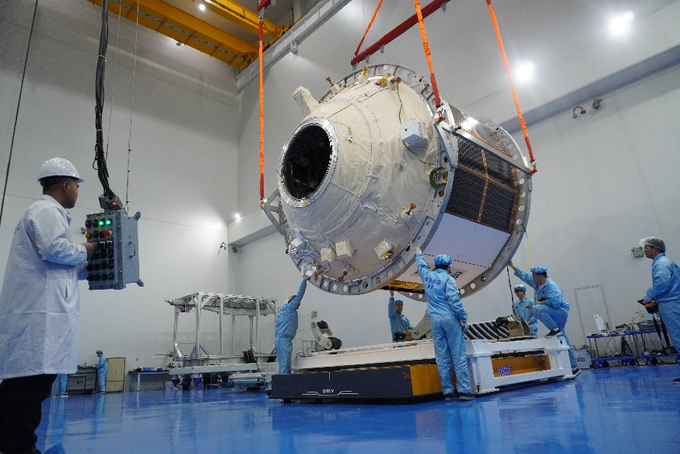
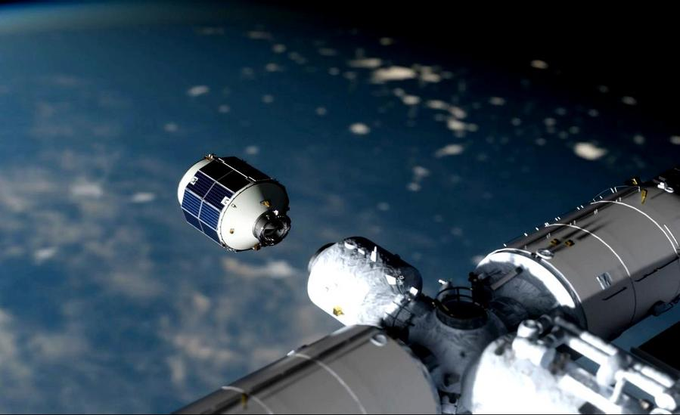
In March 2026, dried moss samples were sent into orbit aboard the Chinese experimental cargo spacecraft Qingzhou. Under conditions of microgravity and cosmic radiation, a controlled watering system gave the plants a tiny amount of water. Nevertheless, the moss came back to life and changed its gray-black coloration to yellow-green. According to Li Xiaoshuang, a researcher at the Xinjiang Institute, this is the first case in which a whole plant was delivered to low Earth orbit and successfully brought back to life. Observations in orbit showed that the moss continued to regenerate and grow.
It is important to understand that the word "first" here refers specifically to a whole organism. In 2025, researchers showed that the spores of another moss, Physcomitrium patens, survived a long stay on the exterior of the International Space Station and retained the ability to germinate. Spores are rudiments, not an adult plant, and the difference between them is fundamental for biologists.
Genetic analysis at the chromosome level revealed in Syntrichia caninervis a large number of genes associated with the response to stress. It is precisely in them, as the researchers conceive it, that the molecular "code" of such resilience is hidden. The practical interest is obvious: according to Li Xiaoshuang, the genetic material of this species could be useful for creating more resistant crops and restoring desertified lands.
A separate line of research is connected with Mars. In a laboratory simulation of Martian conditions, where the atmosphere consisted of 95% carbon dioxide and the temperature varied from −60 to 20 °C, under high UV radiation and low pressure, the dried moss also recovered. However, this does not mean that it will grow and reproduce on the Red Planet: that question remains open for now.
The upshot is more modest than the loud headlines, but no less interesting for that. The moss will not become a ready-made solution for colonizing other planets, but it does show which biological mechanisms of survival are worth studying. The researchers plan further space experiments to understand how plants behave under prolonged exposure to the conditions of space.


