


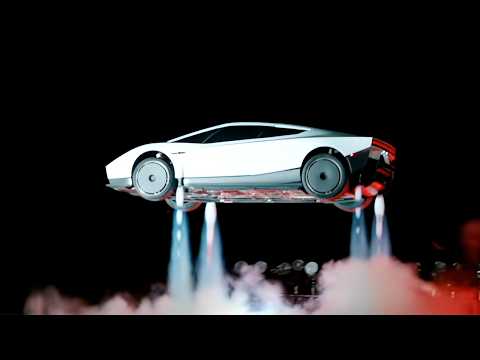
On October 15, 2026, at SpaceX's test facility in McGregor, Texas, Tesla presented an updated prototype of the second-generation Roadster. The car doesn't just accelerate — it performs short hops, mid-air flips, and even drives upside down along a curved ramp, held in place by a suction system.
The demonstration used cold-gas thrusters developed jointly with SpaceX. The car jumped over a row of parked Teslas, including the Cybertruck and Semi, spun in mid-air, and landed softly. Tesla's chief engineer, Lars Moravy, noted that accelerating to 97 km/h takes less than a second, and Elon Musk added that in the production version the speed could exceed half the speed of sound.
The presentation was the culmination of a nearly nine-year saga. The prototype was first shown in 2017 with a promise to begin production in 2020. The deadlines slipped repeatedly, and now the company calls 2028 the real launch date. Musk emphasized on stage: "For real. Actually."
The car is offered in three versions. The base Performance is a two-seater with active aerodynamics and a suction system. The Thrust adds rear boosters. The top-of-the-line Rocket is a single-seater with a full set of thrusters around the body's perimeter, but it is available by invitation only and is not intended for public roads. Range in all cases exceeds 480 km.
Pre-orders are already open: 50 thousand dollars for the Performance and 250 thousand for the Thrust. Questions about the final price, road legality, and real-world range remain open for now. How far will this Tesla and SpaceX collaboration go in a production car?
For enthusiasts who have waited nearly a decade for this car, the demonstration was a vivid reminder: sometimes the boldest promises require time and unexpected technological solutions.


