


Telluride, Colorado. The weekend of September 6–7, 2026. The air smells of pine trees and cinematic magic.
At the famous Telluride Film Festival, audiences are used to surprises. But what happened on Sunday went beyond the usual intrigue. Before the secret screening began, the audience was asked to place their mobile phones in special shielding pouches. The gesture was almost symbolic: to immerse oneself in the story of the 21st century's greatest illusion, one first had to voluntarily relinquish connection to their own reality.
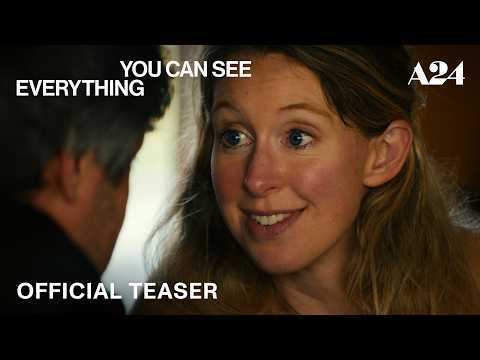
The title of the film appeared on the screen only after the viewers had taken their seats in the darkened theater. You Can See Everything (You Can See Everything). An almost three-hour documentary epic about Elizabeth Holmes—a woman whose name has become synonymous with the collapse of Silicon Valley, and who is currently serving an 11-year sentence for one of the most audacious frauds in history.
The Architecture of Deception
The film, released under the banner of A24 (whose brand has long been a guarantee of impeccable aesthetic and intellectual taste), takes us back to May 2023. Exactly 34 days remained before the prison cell door slammed shut behind Holmes.
It was then, in a rented house in California, that filming began. Holmes did not hide from the cameras—she invited the film crew herself. Her goal was stated clearly and with Holmes-style ambition: to refute the image that had formed of her, to rewrite her own mythology, and to show the very 'truth' that the world had refused to see.
A Strange Alliance
But the main question that lingers after the credits is not about Holmes herself. The question is: who is holding the camera.
The film's directing duo is the embodiment of a cinematic oxymoron. Nathan Fielder, a genius of awkward comedic realism and creator of absurdist masterpieces Nathan for You and The Rehearsal, and Lance Oppenheim, a subtle and insightful documentarian.
Why would someone who built an empire on false promises and black turtlenecks need creators whose weapons are the deconstruction of the absurd and a ruthless, almost visceral truth? Was Holmes trying to turn her tragedy into a black comedy? Or was she looking for directors who understand the nature of falsehood better than anyone, given that they have spent their lives professionally imitating it?
Nathan Fielder himself, during the post-screening discussion in Telluride, looked like a man who had just emerged from a labyrinth. “I still don't fully understand exactly what I went through during these three years of working on the film,”, he admitted, avoiding the audience's gaze.
The Sense of Presence
What Fielder and Oppenheim ultimately achieved is being described with awe by Telluride critics and audiences. The film is being called “shocking,” “stunning,” and “unlike anything seen before.” It is not just a biopic or a scathing exposé. It is an intimate, at times eerie and mesmerizing immersion into the psychology of a person who believed their own lies to the very end—or lied so well that the lie became their only truth.
The buzz surrounding the film has already moved beyond the narrow circle of cinephiles. The trailer for “You Can See Everything,” released by A24, garnered more than 1,6 million views in its first 24 hours. The film will be released wide on 16 October, and it is destined to become the major cultural event of the autumn.
The Paradox of the All-Seeing Eye
The irony of the title “You Can See Everything” lies in the fact that after three hours of screen time, there are more questions than answers. Elizabeth Holmes may have truly wanted us to see everything. But the paradox of her nature is that even when laying all her cards on the table, she continues to play the game.
The film in Telluride ended, the lights in the hall came on, the audience collected their phones and returned to a world where blood can be tested from a single drop, and an empire worth 9 billion dollars — from a single black turtleneck and a low baritone. But the magic of cinema, like the magic of Elizabeth Holmes, lies in the fact that even knowing it was a deception, we still cannot look away.


