


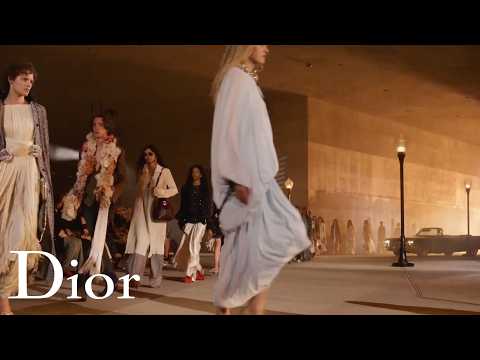
On May 13, 2026, Jonathan Anderson presented his debut Cruise collection for Dior at the Los Angeles County Museum of Art (LACMA).
Los Angeles was a deliberate choice, reflecting the recent opening of a new Dior flagship boutique and honoring the House’s deep-rooted history with Hollywood icons like Marlene Dietrich, Marilyn Monroe, and Grace Kelly.
According to the designer, Dior’s extensive Hollywood heritage served as the collection's starting point, while the California poppy acted as a key source of inspiration.
The show was titled "Stage Fright." This, too, served as a cinematic reference. In Alfred Hitchcock’s film of the same name, Marlene Dietrich famously wore a Bar Jacket from Dior’s 1949 Haute Couture collection. It was this very Bar Jacket, a silhouette Anderson so frequently reimagines, that stood as the collection's central piece.
Vintage Cadillac convertibles, the glow of headlights, and swirling fog created a noir atmosphere reminiscent of classic Hollywood cinema. The invitations were designed to look like script printouts, the teaser film was inspired by Hitchcock’s aesthetic, and models walked the runway in ensembles that paid homage to the golden age of cinema.
The collection was almost entirely devoid of trousers, focusing instead on dresses, pareos, and skirts rich with embellishments, florals, weaving, and varied textures: tweed was paired with silk, suede with denim, and ethereal chiffon gowns were adorned with dense embroidery and seams of oversized pearls, while fabrics mimicked the appearance of feathers and fine fringe.
Accessories were bold and characterized by a "wonderful eccentricity" typical of Anderson, a mood amplified by a collaboration with Irish milliner Philip Treacy, who oversaw the headwear. The collection featured plush boas, brooches the size of evening clutches, asymmetric earrings with shimmering pendants, and statement necklaces crafted from oversized beads. Meanwhile, the men wore whimsical headbands adorned with feather lettering designed by Treacy.
Handbags adhered to the overarching noir cinema concept and the House’s archival signatures. Lady Dior bags featured a houndstooth print, Bow Bags were rendered in the iconic "Galliano" newspaper print, and Saddle Bags were finished with quilting reminiscent of vintage car upholstery or vinyl booths in a roadside diner. The new Dior Cigale bag also made its debut, while playful minaudières in the shapes of snails, ladybugs, and hedgehogs with brooch holders provided a sense of irony.
The following highlights also defined the collection:
Shimmer was a defining element. Sequins and glitter were seen everywhere, adorning sunglasses, handbags, dresses, and the models' makeup.
Floral motifs flourished across the gowns and even appeared on the footwear.
Numerology was a key theme. Shirts featured digits that hinted at Anderson’s personal fascination with the subject.
The collection also referenced the early 20th century. Flapper-style dresses and dramatically dropped waistlines were featured throughout the runway.
In a first for a Dior Cruise presentation, the collection included a complete menswear segment featuring sequined blazers, pajama-style shirts paired with leather trousers, and a series of shirts with contrast piping created in collaboration with the artist Ed Ruscha. Furthermore, a male model was chosen to close the show.
This runway event marked another important milestone in Jonathan Anderson's career as the creative director of Dior, being the last of his debuts. And, evidently, it was another successful one.


