


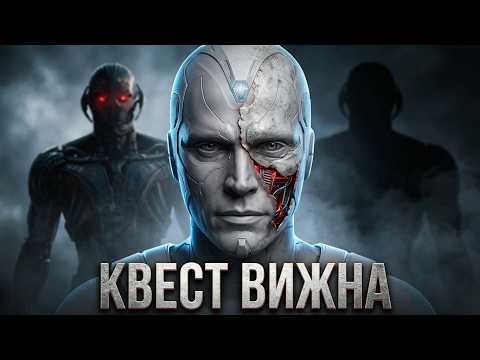
"Vision Quest" is a calm, thoughtful, and visually luxurious continuation of Vision's story after "Wanda/Vision." The series is far slower and quieter than its predecessor: there is almost no momentum, and the pacing is deliberately unhurried. This is precisely why some viewers get a feeling of boredom. But it is precisely this rhythm that allows for a truly deep immersion in the story. "Vision Quest" is a conscious rejection of hustle. If the first series shouted, its successor whispers in your ear. And that whisper pulls you into the whirlpool headfirst, offering the viewer a completely different, far calmer and more thoughtful experience.

The Mind as a Labyrinth
White Vision, who gained freedom in the finale of the previous series, is now in hiding. His main battle takes place not on the fields of combat but in his own mind. The creators have turned his consciousness into a unique "thought labyrinth." Here, among the echoes of the past, digital ghosts of Tony Stark interact with him. And, of course, the return of James Spader as Ultron — imprisoned, but no less dangerous and brilliant for it. Their dialogues become the intellectual and emotional core of the series. In parallel, in the real world, the storyline of a grown-up Thomas Shepherd unfolds, whose mysterious connection to Vision's legacy keeps the tension high.
The heroes seek an answer to the main question: Who am I? By the middle of the season, phrases are constantly heard: "I am who I am," "I am," "I am who I am," and so on.
Visual Ecstasy and Masterful Hooks
The imagery in the series is an art form in its own right. The cinematography and art direction of the "mind house" produce genuine visual ecstasy. The series masterfully works with the viewer's attention: the finale of the first episode doesn't let you simply exhale, forcing you to immediately turn on the second, and that one, in turn, unleashes a powerful plot twist on the viewer. And by the fourth episode, when full-fledged special effects finally kick in, you realize that all this time Marvel wasn't just stalling but preparing the ground for a visual fireworks display. By the end of the second episode, you can already physically feel that supreme pleasure from how beautifully every moment is shot.
From the first episode everything looks expensive and stylish, and by the end of the second, genuine visual pleasure begins. The cinematographers and artists clearly worked with a love for detail — from lighting and composition to the overall atmosphere. This is one of those cases where you can simply watch how it's shot and get a kick out of it.
The Price of Meditativeness
But this depth comes at a price. And that price is pacing. There really is no momentum here; it is dissolved in reflection. The fifth and sixth episodes are frankly stuck in place. The series risks drowning in its own melodrama, when long conversations begin to slow down an already unhurried narrative. This is exactly the case where meditativeness balances on the edge of boredom, and not every viewer is ready to go through this test of patience. Many find it lacking drive, but it is precisely this unhurriedness that allows for a deep immersion into the state of the protagonist.
Verdict: an honest 8.2 out of 10 from Gaya
If "Wanda/Vision" deservedly receives around 9.4 for originality, style, direction, and emotional charge, then "Vision Quest" is a different story. Calmer, more intimate, at times drawn out, but still smart and beautiful. The final score is 8.2/10. It is definitely worth watching, especially for those who are ready for a slow immersion instead of constant action.


