


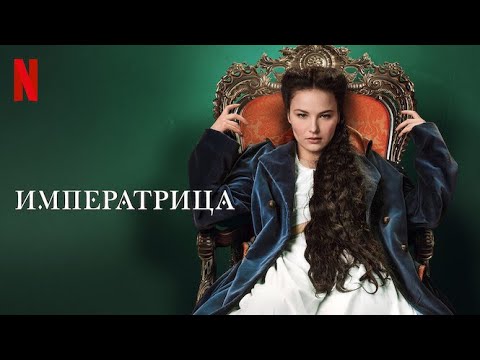
The series "The Empress" (2022–2024) is a solid historical drama that grips with its atmosphere, although not without flaws. You are absolutely right: the plot is truly captivating, but the first episode does suffer from a slow pace, making the viewer sweat quite a bit before the intrigues of the Viennese court gain momentum.
A German perspective on Austrian history It is worth noting that this is a German-Austrian project (produced by Constantin Film and Beta Film), which adds a special piquancy. The Germans, with their inherent thoroughness and pedantry, recreate the history of the Austrian Empire. This is felt in the details: from the impeccable work with historical context to the attention to the architectural nuances of the Hofburg. It turned out to be a kind of "German order" in the world of Austrian intrigues.
Gaya's rating - 6.9/10. We lacked dynamics, but it's still a high score for us, especially for this genre! A historical drama where tempo is often sacrificed for beautiful costumes and lingering glances. The series is not perfect, but it has its strengths. The historical drama is a success!
The dialogues here work to reveal characters and the stuffy court order.
— Death does not separate, death unites. It is life that separates us.
This thought sets a melancholic and fatalistic tone. It well emphasizes that the main tragedies of the characters occur not because of fate, but because of their own decisions and inability to hear each other in a world where feelings are subordinate to protocol.
— She doesn't talk to me at all, she won't forgive me!
— We only need God's forgiveness, Elisabeth. Everything else is vanity.
An excellent exchange of lines, showing the abyss between the characters. On the one hand, there is living human pain and fear of loss; on the other, cold, almost cynical pragmatism and an attempt to hide emotions behind religious dogmas. This perfectly illustrates how sincerity is suppressed in the Hofburg.
— What kind of décolletage is this? We are in Vienna, not Versailles!
A classic phrase that perfectly conveys the essence of the main character's conflict with the Austrian court. It lacks deep philosophy, but it contains all the essence of Viennese etiquette: primness, rigid boundaries, and rejection of any freedom, even in small things like clothing.
In conclusion, "The Empress" is a decent, unhurried film. If you are ready to forgive its lack of action and accept a waltz of events rather than a gallop, you will get a pleasant historical spectacle with a good cast. And there are echoes of "Game of Thrones" somewhere.
Court intrigues: Here, as in Westeros, every step can be the last, and a courtier's smile often hides a dagger behind their back.
Struggle for influence: If in "Game of Thrones" it's a fight for the Iron Throne, then here it's for influence over the emperor and control over the young empress.
But there are also differences: "The Empress" is a chamber story. There are no dragons or large-scale battles, but there is an equally fierce war of nerves in the ballrooms. If "Game of Thrones" is epic in scale and fantasy, then "The Empress" is a psychological duel where words, glances, and adherence (or violation) of etiquette are the weapons.


