


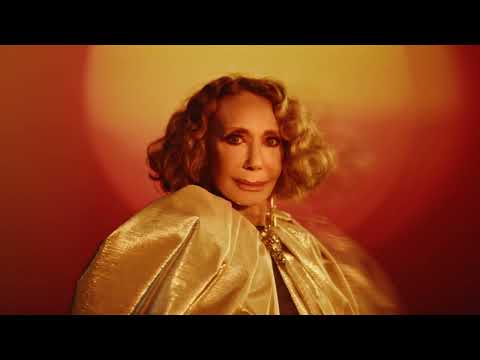
Zara recently unveiled a collaboration with the legendary Marisa Berenson, who serves as the face of the campaign titled "The House of Marisa." The result is a luxurious, deeply symbolic collection that marries affordable fashion with authentic historical chic.
Marisa was born in 1947. Her father, Robert Berenson, was a diplomat, while her mother, Maria-Luisa (Gogo), was the daughter of the great Elsa Schiaparelli. Immersed in the world of haute couture from birth, she made her media debut while still in her cradle when Vogue published photos of her christening.
With such a background and a circle of friends comprising great artists and aristocrats, she was the quintessential "nepo baby." In those days, the standard career path for such individuals was to lead the life of a socialite. Marisa, however, displayed a streak of independence and chose to forge a different path for herself.
When she was 16, her striking, almost otherworldly beauty caught the eye of the legendary Diana Vreeland, who recognized her as a future icon of the era. This partnership earned Marisa the covers of Vogue and Harper’s Bazaar, establishing her as one of the most prominent and highest-paid models of her time.
She became the living embodiment of the 1970s spirit, famously dubbed the "girl of the decade" by Yves Saint Laurent. A close friend of Andy Warhol and a fixture at the iconic Studio 54, she was also an early devotee of Halston, whose designs she wore with genuine elegance. For her, style was never a job, but a natural state of being.
Berenson also conquered the silver screen. Her roles in cinematic masterpieces like Luchino Visconti’s "Death in Venice," Bob Fosse’s "Cabaret," and Stanley Kubrick’s "Barry Lyndon" solidified her status as a genuine film icon rather than just a "model-turned-actress."
Today, Marisa Berenson leads a measured yet fulfilling life, dividing her time between Europe and Morocco. She is an avid photographer, currently writing her memoirs and maintaining close ties with the House of Schiaparelli. She occasionally appears at shows or in front of the camera, doing so purely out of personal interest rather than professional necessity.
This creates a fascinating paradox: a fast-fashion titan defined by the constant pursuit of fleeting trends has partnered with a woman whose image lacks even a shadow of the industry's typical frantic need to conform. Her secret to timeless relevance lies in the fact that she is simply true to herself. One wonders if Zara has managed to "ground" itself and slow down through "The House of Marisa"?


