


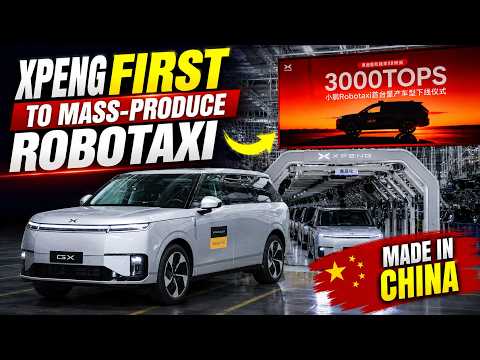
Chinese electric vehicle manufacturer XPeng has reached a significant milestone in the evolution of autonomous transportation. From its production facility in Guangzhou, the company successfully rolled out its first serially produced robotaxi. This vehicle represents a breakthrough in full-stack development, as it was designed and manufactured entirely through XPeng’s internal engineering capabilities, signaling a new chapter for the brand.
The new robotaxi is constructed on the specialized GX platform and features a cutting-edge autonomous driving system. Utilizing a "pure vision" approach, the vehicle relies on high-definition cameras coupled with advanced artificial intelligence rather than traditional LiDAR sensors or high-precision mapping. The core of this system is the proprietary VLA 2.0 model, powered by four Turing chips that deliver a combined computing capacity of up to 3000 TOPS, allowing the car to navigate dense urban traffic with precision.
This achievement is the result of long-term strategic planning and massive investment into proprietary technology stacks. XPeng has distinguished itself as the first Chinese automotive firm to successfully transition an in-house developed robotaxi into a mass-production phase. This move validates the company's technical maturity and its readiness to compete on a global stage in the driverless mobility sector, setting it apart from competitors.
The start of serial production is a critical prerequisite for achieving large-scale deployment. According to the company's roadmap, pilot operations are slated to begin in the second half of 2026. By early 2027, XPeng expects to shift toward full commercial exploitation of these vehicles, operating without a safety driver. These fleets will be deployed across major Chinese cities in close coordination with local transport operators to ensure a smooth transition into urban grids.
For XPeng, the robotaxi project signifies a fundamental shift in business strategy, moving from a traditional vehicle sales model to the creation of a comprehensive ecosystem for autonomous mobility services. While partners benefit from a battle-tested and ready-to-use platform, urban environments stand to benefit from reduced traffic congestion and a significant decrease in harmful emissions. Meanwhile, the public gains access to a safe, reliable, and affordable transport alternative.
Despite the technological leaps, several challenges still lie ahead for the widespread adoption of such vehicles. These include navigating complex regulatory environments in different jurisdictions and the need to accumulate millions of miles in diverse, real-world conditions to prove reliability. XPeng remains focused on a pragmatic approach, utilizing feedback from early users to continuously optimize and refine the system's performance in unpredictable scenarios.
For the average consumer, this development heralds the start of a transformative era in personal mobility. The concept of summoning a clean, quiet, and fully autonomous vehicle through a simple mobile application is becoming a tangible reality. In the coming years, robotaxis are expected to become an integral part of the urban fabric, providing a reliable and silent solution for residents in highly populated metropolitan areas.
XPeng continues to move forward with a clear vision, balancing its high ambitions with a realistic implementation schedule. The company's journey into autonomous ride-hailing is currently one of the most significant and closely watched stories in the world of high-tech transportation. By integrating innovative hardware with advanced AI, XPeng is positioning itself at the forefront of the smart city revolution, paving the way for a driverless future.


