


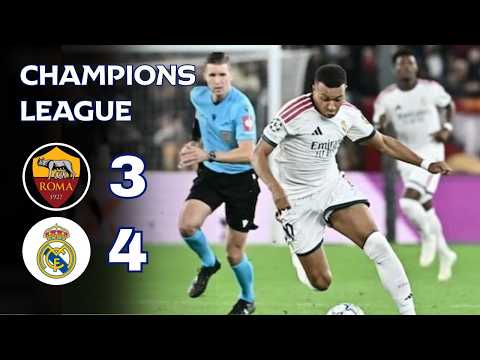
In Rome everything was going against Real. The hosts were leading 3:1, the stadium was roaring with delight, and the "royal club" looked lost and listless. But in the last eight minutes of the Champions League match on 14 October 2026, everything turned around: three goals from corners — and 4:3 in favour of the visitors. This victory is not just points, but a reminder of how thin the line is between defeat and triumph in European competition.
José Mourinho, back on the Roma bench, did everything to make his team dominate. A double strike from Donyell Malen and a goal from Marten de Roon brought the Madrid side to their knees. It seemed the Portuguese coach's tactics had worked perfectly: pressing, quick counterattacks and self-assurance. Yet it was precisely Mourinho's substitutions — or their absence at the right moment — that became the key to the denouement. When Carlos Espí and Endrick came on, the dynamics changed instantly.
Real did not win through the individual brilliance of stars like Mbappé or Vinícius. The three goals were born of a single source — precise corner deliveries from Arda Güler. This is no accident, but systematic work on set pieces, which often decides outcomes in modern football. The analogy is simple: just as in chess one strong move in the endgame turns a game around, so one accurate corner routine can save a team from catastrophe.
The psychological aspect is especially important here. Real have more than once shown the ability to come back in the Champions League, but this time it was about the youngsters. Endrick and Espí, coming off the bench, showed that squad depth is not just words. Antonio Rüdiger, a former Roma player, put the finishing touch in the 90th minute, recalling personal motives and strength of character. Such moments reveal hidden springs: not only tactics, but also the desire to prove something to oneself and to former teammates.
For Roma, the defeat was a bitter lesson. Mourinho's team controlled the game but failed to hold on to their advantage. In the Champions League, where the stakes are high and mistakes are costly, relaxing at the end often proves too expensive. This is not just a loss of points — it is a signal of the need to work on concentration until the last second.
Real's victory in Rome is yet another confirmation that in European competition the outcome is decided not only by starting lineups, but also by readiness for surprises. Young players, set pieces and an unshakeable belief in the comeback became the factors that once again propelled the Madrid side forward. In the long term, such matches strengthen a team's character and remind us: in football nothing is predetermined until the final whistle.


