


For a long time, international success was synonymous with universality. For a song to cross borders, it seemed it had to be as neutral as possible—universally accessible, stripped of strong cultural ties, and adapted to the global pop vernacular.
Today, however, the landscape is increasingly shifting. Success no longer belongs to those who dilute their own heritage.
Instead, it belongs to those whose music flows from their origins. And this is no longer an isolated phenomenon.
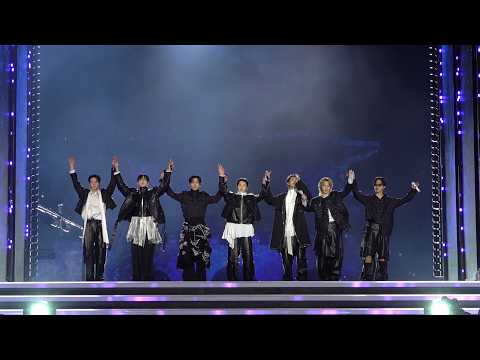
With ARIRANG, BTS does not turn to impersonal universality, but to Korea's deep cultural memory. The title itself references one of the nation's most iconic folk songs—a symbol of the journey, parting, memory, and collective identity. Yet, the project has received a powerful international response.
DARA wins Eurovision 2026 with Bangaranga—a song inspired by the Bulgarian ritual tradition of kukeri, where noise, movement, and masks symbolize purification and renewal. This is not "sanitized international pop." This is a very specific cultural energy. And that is exactly what proves so compelling to all of Europe.
Afrobeats continues its global expansion not by abandoning its rhythmic identity, but by bringing it into the global musical mainstream. Burna Boy, Tems, and other artists are proving that a local musical language is no longer a barrier.
Latin American music has also long since moved beyond its regional boundaries. Bad Bunny, Karol G, and Shakira do not adapt to an external template—they are shifting the global center of musical gravity itself.
Even K-pop is evolving not as "local music striving to go global," but as a complete cultural system with its own visual aesthetics, language, and codes that the world is learning to decode.
This does not look like a passing trend. Rather, it feels like a cultural shift.
Perhaps global audiences have grown tired of sterile universality.
In a world where algorithms increasingly push the familiar, authenticity begins to resonate more loudly.
When that happens, the local ceases to be a limitation. It becomes a source of power.
Music is once again functioning not as a tool for erasing differences, but as a space for translation between cultures. It does not make everyone the same. Instead, it allows everyone to speak from their own depths.
What does this add to the global sound?
Perhaps the era of returning to one's roots is not a move toward division, but the opposite.
The more honestly each voice speaks from its own cultural memory, the clearer the shared source becomes, rather than the differences.
Because deeper than language, genre, tradition, and geography, music reminds us of one simple truth:
a tree may have many branches, but it has only one root.
And perhaps that is why the world today responds not to sameness, but to authenticity.


