


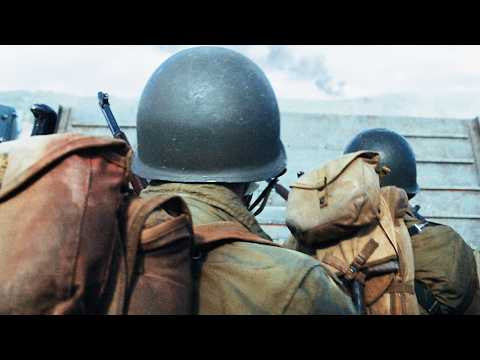
The world premiere of Anthony Maras’s historical thriller sees the fate of millions decided not on the battlefield, but within the cramped confines of command centers, amidst the clicking of barometers and the static of radio transmissions.
May 29, 2026, marked the global debut of the British-French co-production Pressure. Director Anthony Maras, known for the unflinching realism of Hotel Mumbai, shifts his focus from burning corridors to the damp, claustrophobic operations rooms of June 1944. The film’s narrative begins exactly 72 hours before D-Day—the massive Allied invasion of Normandy. This is no sprawling epic of tank divisions and aerial armadas, but rather a chamber thriller with documentary-like intensity, exploring how science, intuition, and individual responsibility converge at the very moment history is forged.
By early June 1944, Operation Overlord is 90% ready for execution. The landing craft are loaded, paratroopers briefed, and logistics synchronized to the minute. Yet, a storm is gathering over the English Channel as meteorological data points to two powerful weather systems closing in. Any error in the forecast threatens to send hundreds of thousands of soldiers to their deaths in turbulent seas or risk losing the element of surprise, potentially collapsing the entire Western Front.
At the heart of the story is Group Captain James Stagg (Andrew Scott), the operation's chief meteorologist. Over the course of three days, he must synthesize fragmented weather reports into a definitive verdict and convince the High Command, led by General Dwight D. Eisenhower (Brendan Fraser), to make a choice amidst total uncertainty. The film unfolds as a countdown: every passing hour narrows the window of opportunity, every meeting reveals simmering political tensions, and every glance at the leaden sky serves as a grim reminder of the cost of failure.
Anthony Maras demonstrates a masterly command over both space and time. By confining the action to command rooms, weather stations, and the corridors of military bases, the director crafts an atmospheric "bunker thriller." The camera rarely ventures outdoors, but this creates a sense of focus rather than restriction, allowing the audience to feel the same heavy, stale air as the characters.
With a runtime of approximately 100 minutes, the film perfectly embodies a "here and now" philosophy. The editing is brisk without being chaotic, while the sound design is built around the howl of the wind, the click of switches, ticking clocks, and snippets of radio chatter. The visual palette remains restrained, dominated by shades of grey, dim lighting, damp raincoats, and maps marked with wax pencils. Maras proves that the most gripping action can unfold without a single shot being fired.
Playing James Stagg, Andrew Scott delivers a performance of the highest caliber and maturity. His character avoids grandiloquent speeches; instead, his strength lies in a clenched jaw, hands that tremble while leafing through weather charts, and the ability to remain silent when others would scream. Scott transforms a scientist into a man carrying an invisible but agonizingly heavy burden on his shoulders.
Brendan Fraser’s portrayal of Eisenhower sidesteps the clichés of "general-like" bravado. His commander is weary, weighing every word with the knowledge that any decision will be historic, making his final choice not with confidence, but with a painful clarity of responsibility. The chemistry between Stagg and Eisenhower is built on mutual respect, underlying fear, and the realization that they are on the same side in a battle against the elements.
The supporting cast is equally formidable, with Kerry Condon, Damian Lewis, and Chris Messina portraying staff officers, intelligence agents, and technical experts who form a layered portrait of a massive machine on the verge of movement. Their dialogue is rich with subtext, where dry terminology masks personal ambitions, political risks, and human doubts.
The film is grounded in historical fact. James Martin Stagg was a real person: a Scottish meteorologist who, on June 4, 1944, analyzed data from ocean stations and reconnaissance flights to insist on a 24-hour delay of the operation. This brief window between storms allowed the invasion to proceed, yet it remains one of the most perilous command decisions of the 20th century. Eisenhower truly did utter the legendary words, "Okay, let's go," knowing that should the mission fail, history would brand him either a butcher or a failure.
Pressure does not attempt a verbatim reconstruction of meeting minutes. Instead, Maras and the screenwriters shift the focus to the psychology of decision-making within an information vacuum. The film poses a question that remains relevant today: how can one trust science when the stakes are measured not in percentages, but in human lives? And can a single person, without a general’s stars, truly alter the course of global history?
The 12+ age rating reflects an absence of graphic violence while signaling a tense psychological atmosphere and the historical context of the war. Its British-French production highlights both the international scale of the operation and the collaborative nature of the Allied effort.
Pressure is a rare example of a war movie where the enemy wears no uniform but is instead named "cyclone." The film eschews depictions of Omaha Beach or ruined villages; it shows the room where it is decided whether those beaches will become a mass grave or a foothold for freedom. It is a story about the fragility of the line between victory and catastrophe, and how history often turns not on the thunder of cannons, but on the quiet sigh of a man who dared to say, "I am certain."
The world premiere took place on May 29, 2026. The film promises to be one of the year’s standout intellectual thrillers, reminding audiences that sometimes the most consequential "yes" is spoken in total silence.


