


Stuttering is usually perceived as a disruption of speech fluency: sounds and syllables are repeated, stretched, or seem to get stuck before continuing a word. But in music, a similar discontinuity has met a different fate. What in conversation can cause a person pain and hinder communication, performers have learned to turn into rhythm, emotional emphasis, and a recognizable artistic language.
The voice begins to stumble — and that is precisely why it is impossible to forget.
A Century of Musical Stumbling
On September 1, 2026 music critic Kieran Press-Reynolds published in Pitchfork a major feature A History of the Musical Stutter — "A History of Musical Stuttering."
This is not a scientific study but a music-historical overview: the author traces how the repetition of sounds and syllables has been used in popular music for over a hundred years — from songs of the early twentieth century to contemporary glitch pop.
In this history, we encounter Jeffrey O'Hara, John Lee Hooker, The Who, Otis Redding, David Bowie, Elton John, Scatman John, Skrillex, SOPHIE, James Blake, Charli xcx, and many other performers.
Across different eras, the interrupted voice conveyed infatuation, embarrassment, protest, sexual tension, inner vulnerability, and a sense of digital instability. One musical device proved capable of containing a multitude of human states.
When a Person Cannot Utter What Matters Most
One early example is Jeffrey O'Hara's song K-K-K-Katy, written in 1918Its hero is so agitated next to his beloved that he cannot freely utter her name.
Stuttering is used here as a comic and at the same time touching sign of being in love. The feeling seems to outrun speech: the person already knows what he wants to say, but emotion does not allow the word to sound immediately.
Later, this image repeatedly returned in popular music. The voice stumbled where ordinary speech seemed too smooth for the excitement being experienced.
However, there is an important difference between artistic imitation and real stuttering. For a performer, repeating a syllable can be a chosen expressive device. For a person with a speech disorder, it is not a game but an experience that can affect communication, confidence, and attitude toward one's own voice.
The Voice of a Defiant Generation
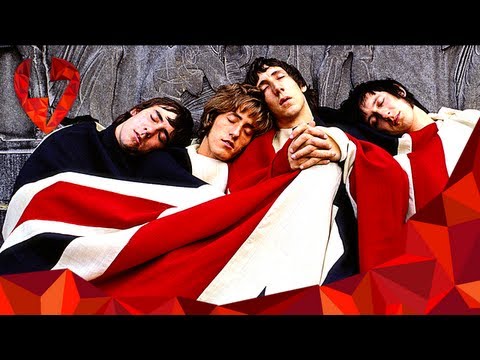
In 1965 The Who released My Generation. Roger Daltrey's manner of pronouncing certain words with repetitions became part of the image of a young man who challenges societal expectations.
The song reached the second position on the British chart, but the BBC did not air it for some time, fearing that the recording might offend listeners who stutter.
In this case, the discontinuity no longer depicted a shy lover. It became a sign of tension, nervous energy, and defiance. The voice seemed not to fit into the established mold—just like the generation on whose behalf it sounded.
The Word Becomes What It Means
One of the most recognizable examples is Changes by David Bowie. The song appeared on the album Hunky Dory, released in December 1971, and On January 7, 1972 it was released as a standalone single.
In the famous chorus, the first word breaks into repeated sounds: “ch-ch-ch-changes.” The device works on several levels at once. The repetition creates a rhythmic hook, holds attention, and at the same time makes the word “change” itself change while being pronounced.
Form becomes meaning: Bowie does not just sing about change—the word loses its usual stability and transforms in the listener's ear.
A similar effect occurs in Bennie and the Jets by Elton John. The staccato pronunciation of the name Bennie became one of the song's most recognizable details. Here, repetition is no longer an obstacle but an additional musical instrument.
When vulnerability becomes strength
A special place in this story belongs to John Paul Larkin, known as Scatman John.
He stuttered since childhood and long feared that this trait would prevent him from becoming a professional performer. But it was precisely his relationship with his own voice that formed the basis of his main artistic image.
In the song Scatman (Ski-Ba-Bop-Ba-Dop-Bop), first released in 1994, rapid syllables, scat, repetitions, and a deliberately broken rhythm turn a speech difficulty into virtuosic performance.

Yet the composition contains little literal stuttering. Its power lies elsewhere: Larkin takes an experience he long perceived as a limitation and creates from it a space of freedom.
The song found a special resonance among people who stutter. Not because the difficulty automatically made the performer stronger, but because he himself changed his relationship with his voice and allowed it to become art.
Why repetition is impossible to forget
Repetition is one of the fundamental principles of music. Thanks to it, we recognize a melody, anticipate the return of the chorus, and begin to move inwardly with the rhythm.
Musical stuttering creates particularly strong anticipation. The brain already senses the continuation of the word, but the music deliberately delays it. Between the first sound and the completed phrase, a brief moment of uncertainty arises.
When the word finally unfolds completely, the tension resolves. This delay sharpens perception and turns even a single syllable into a small musical event.
At the same time, the voice ceases to be merely a carrier of text. It becomes an independent rhythmic instrument—almost a drum, capable of splitting time into short impulses.
The digital voice breaks into pieces
With the advent of samplers and digital programs, it became much easier for musicians to cut a recording into tiny fragments, repeat consonants, stretch vowels, and rearrange the human voice.
In electronic music, Skrillex's fragmentation captures not just a single syllable but nearly the entire composition. The music seems to shudder, pause, and reassemble itself.
SOPHIE turned the human voice into an artificial, almost tangible material. In James Blake's work, discontinuity creates a sense of fragility and emotional uncertainty.
In glitchcore and hyperpop, stuttering ceases to be a mere ornament. It becomes the foundation of the musical structure—a sonic reflection of a world of notifications, short videos, overloaded attention, and an ever-changing digital environment.
If earlier the voice stumbled from being in love or from excitement, now it can sound as if reality itself is losing stability.
Where the technique ends and the person begins
Musical stuttering requires careful discussion. One cannot automatically equate a stylized repetition in a song with a real speech disorder or turn another person's difficulty into a beautiful metaphor.
An artistic device is chosen and controlled. Real stuttering may be accompanied by fear of speech, social anxiety, and years of experience of being misunderstood.
That is why Scatman John's story is so important. It does not say that suffering is necessary for creativity. It shows something else: a person is capable of independently determining what place their peculiarity will occupy in their own life.
Larkin did not allow others to decide what his voice should be. He found a form in which that voice could sound freely.
The perfection of the imperfect
We are accustomed to thinking that beautiful performance should be smooth, clean, and flawless. Musicians spend long hours removing accidental sounds, irregularities, and interruptions.
But some of the most recognizable musical moments arose precisely where the voice wavered, lingered, or repeated a single syllable several times.
Discontinuity preserves the trace of human presence. It reminds us that behind the perfect recording remains a living body: breath, tension, the desire to speak out, and the impossibility of containing feeling in an even phrase.
Sometimes music is born not despite this glitch, but within it.
When everything is perfectly ideal
Kieran Press-Reynolds's review tells the story of one artistic device. But behind it opens a deeper conversation about the nature of creativity.
Art does not always smooth away irregularities. Sometimes it changes the space around them—and what seemed like an obstacle becomes a recognizable signature of the performer, their voice in both the literal and figurative sense.
Perhaps perfection lies not in the absence of quirks, but in the fullness of expression. In that moment when a person stops tailoring their own voice to someone else's idea of correctness and allows it to sound freely.
In music, imperfection does not always require correction. Sometimes it is enough for it to find its place in the rhythm—and become that very sound by which we are recognized.


