


Deep within the Indian Ocean, far beyond the reach of sunlight and under pressures hundreds of times greater than the atmosphere, scientists have made a remarkable discovery. At depths exceeding 7,000 meters, they located the largest, oldest, and most expansive whale graveyard ever documented on Earth.
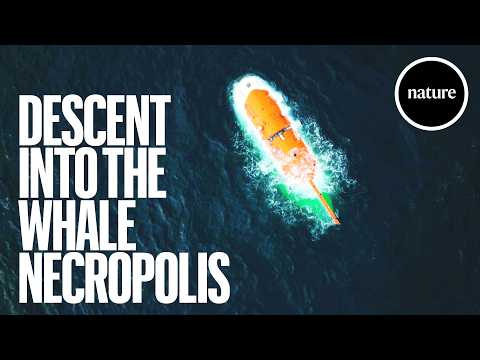
Detailed in a study published on June 10, 2026, in the journal Nature, the findings were the result of a deep-sea expedition using the Fendouzhe submersible. Along a 1,200-kilometer stretch of the seabed, researchers identified the remains of hundreds of cetaceans, some dating back more than five million years.
Yet, the sheer volume of these finds was not the most astonishing aspect of the mission.
What initially appeared to be a site of death was actually a vast expanse where life continually renews itself.
When a whale concludes its journey and sinks to the ocean floor, its carcass becomes the foundation for a burgeoning ecosystem. Sea stars, mollusks, crustaceans, anemones, and the mysterious Osedax bone-eating worms congregate around the remains, feeding on the nutrients trapped within the skeletal tissue. For years, or even decades, a single whale can sustain hundreds of living organisms.
Researchers discovered that these were not merely isolated "whale falls," but rather an entire deep-sea corridor of life that has persisted for millions of years. Some specialists have already begun referring to the site as a "super-corridor of whale communities."
This discovery fundamentally alters our perception of the ocean's most remote depths.
For a long time, the deep-sea floor was considered a relatively barren environment where life existed only in sparse clusters. However, this find reveals a starkly different reality. Even in the planet’s darkest corners, the ocean fosters conditions for prosperity and constant renewal.
In this sense, every whale serves as a bridge between two worlds.
Its existence does not cease upon sinking into the abyss. Instead, it persists through a multitude of new life forms that find a way to survive because of it.
There is a profound philosophical resonance to this discovery that goes beyond pure science.
The ocean illustrates a principle inherent in all of nature: nothing truly vanishes without a trace. Every ending transitions into a new form, becoming a verse in the next cycle, the next story, and the next song of life.
For five million years, this symphony played in total darkness, hidden away from human observation.
It is only now that science has finally been able to hear it.
This may be why the ocean remains the planet's most profound teacher. It reminds us that an end and a beginning are often just different perspectives on the same point.
As submersibles continue to probe the depths, the ocean keeps narrating its ancient tale of how all living things are interconnected.
Where we might expect to find finality, nature is busy crafting a new start.
How does this discovery change the resonance of our planet?
This story adds a deep note of continuity to the Earth's resonance. It reminds us that life never moves in a straight line. It flows in circles, waves, and echoes. Each completed cycle serves as the foundation for the next. This is why the ocean remains the planet’s greatest guardian of memory—a place where even the silence continues to sing.


