


For centuries, humanity has explored the Earth primarily through its eyes.
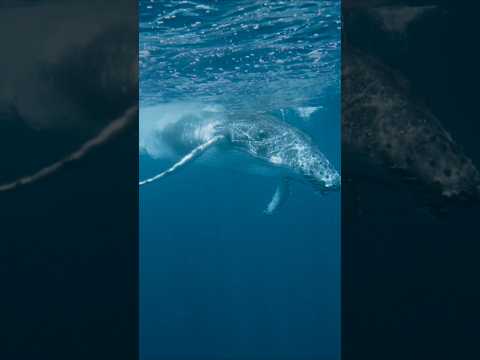
We charted the continents. We measured the depths of the oceans. We recorded currents, mountain ranges, and borders.
Today, however, a new era of exploration is beginning. Scientists are increasingly asking a fundamental question:
What if the planet could be studied not just through imagery, but through sound?
This very concept gained significant traction at the OCEANOISE 2026 international conference, held in Spain in May 2026.
The event brought together researchers specializing in marine acoustics, underwater noise, oceanic monitoring, and the study of deep-sea soundscapes.
The central theme was the ocean soundscape—its vibrant, living acoustic environment.
The Ocean is Never Silent
At first glance, the depths seem devoid of sound. However, hydrophones reveal a completely different reality. The ocean is teeming with voices. Here you can hear:
- whale songs;
- dolphin clicks;
- fish signals;
- the crackling of coral reefs;
- shifting ice;
- underwater currents;
- the roar of storms;
- and even the faint vibrations of deep-sea ecosystems.
Every region possesses its own acoustic character. Every ecosystem has its own sonic signature. This is why researchers are increasingly focusing on the concept of the ocean soundscape.
When Artificial Intelligence Begins Listening to the Ocean
The volume of data streaming from hydrophones worldwide is now so vast that manual processing has become impossible. This is where artificial intelligence comes to the rescue.
Modern algorithms are now capable of:
- distinguishing biological signals;
- separating natural sounds from shipping noise;
- identifying shifts in ecosystems;
- tracking animal migrations;
- and constructing acoustic maps of oceanic regions.
In effect, humanity is creating tools for the first time that allow us to hear the ocean on a planetary scale.
Sperm Whales and the Quest to Understand an Alien Language
One of the most fascinating initiatives in this field is Project CETI.
Researchers are utilizing autonomous underwater vehicles and AI systems to analyze the communication patterns of sperm whales.
The project's goal extends far beyond simple observation. Scientists are attempting to understand the underlying structure of these animals' communication. Some studies have already highlighted the incredible complexity of their acoustic signals. This does not mean that humanity has successfully decoded whale language.
However, it marks the first opportunity to investigate it systematically.
And this opens a new chapter in the relationship between humans and other forms of life.
Listening to Ecosystem Health
One of the most surprising discoveries of recent years involves coral reefs.
It turns out that a healthy reef sounds distinctly different from a damaged one. The acoustic environment reflects the overall state of the ecosystem.
Today, AI can already analyze these differences and help scientists monitor changes in the marine environment through sound. A remarkable picture is emerging: sound is not just a subject of study. It is becoming a vital tool for diagnosing the health of life itself.
From Depth Charts to Sonic Maps
For centuries, explorers mapped the topography of the ocean floor.
Now, work has begun on an entirely new kind of map.
These are not maps of depths. Nor are they maps of currents. They are maps of sound.
Maps that will display:
- whale vocalizations;
- active reef zones;
- acoustic migration routes;
- the unique sonic features of various ecosystems;
- and how the ocean changes over time.
This may be one of the most extraordinary scientific endeavors of our time.
What Does This Event Add to the Planet’s Song?
This new wave of research reminds us that Earth is more than just a world of forms.
It is also a world of voices. It is a world of vibrations. It is a world of sounds.
For centuries, humanity mapped mountains, rivers, and continents.
Today, we are beginning to map the voices of life itself.
The voices of whales. The voices of reefs. The voices of currents. The voices of the deep.
And the more closely we listen to the ocean, the clearer one realization becomes:
Earth has never been silent.
Throughout history, it has been telling its story through sound.
Today, humanity is taking another step toward hearing that story in its entirety.


