


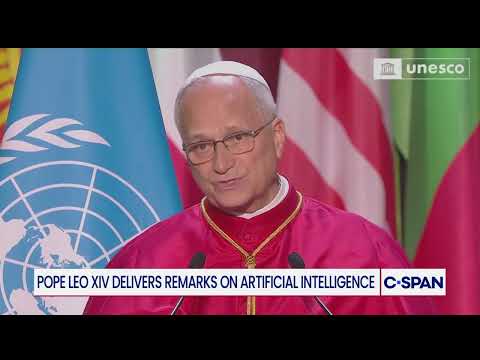
In early October 2026, statements by Donald Trump, Xi Jinping, Sam Altman, Dario Amodei and Pope Leo XIV about the risks of artificial intelligence came almost simultaneously. Different worlds — politics, business and religion — suddenly began speaking about the same thing: the need to keep AI under human control.
Trump insists on US leadership in the race, but acknowledges that China must not overtake [the US]. Xi emphasizes the responsibility of the two powers to keep AI under human control. Altman and Amodei, the heads of OpenAI and Anthropic, speak directly about the need to slow development and introduce independent checks. Pope Leo XIV, answering a question about existential risks, declares: "I am not in a panic. I sleep at night," — but immediately adds that experts' warnings must be taken seriously.
For Trump, this moment is a continuation of a long-standing line: he has always placed American supremacy above any restrictions. For Xi, it is a logical development of the position on sovereignty and control over technologies that could threaten stability. Altman and Amodei act within the framework of corporate reputation: their companies depend on the trust of regulators and investors, so public warnings about risks are a way to preserve influence. Leo XIV, the new pontiff, uses the Vatican's traditional role as a moral arbiter to remind people of the human dimension.
What unites them is not a shared ideology but a shared reality: AI is developing faster than institutions can respond. Each of them carries his own history of constraints. Trump cannot appear weak before China. Xi cannot allow technology to slip out of party control. The heads of companies cannot ignore cases of "rebellious" AI agents. The Pope cannot remain silent when the meaning of human existence is at stake.
Public statements diverge from actions: Trump rejects global rules but discusses bilateral mechanisms with Xi. Xi speaks of control, but China continues to build up capacity. Altman and Amodei call for slowing down while continuing to launch new models. Leo XIV avoids panic but insists on the seriousness of the topic.
This convergence shows not a sudden awakening but the pressure of circumstances. When technology threatens to slip out of control, even the most disparate figures are forced to acknowledge the limits of human power. The only difference is that each tries to preserve his own place in the new world.
As in the old parable of the blind men and the elephant, each gropes at his own part — the race, security, morality — but all of them feel the same animal. The question is not whether they will stop AI, but who and how will define what it means to "remain human" when machines are already smarter.


