


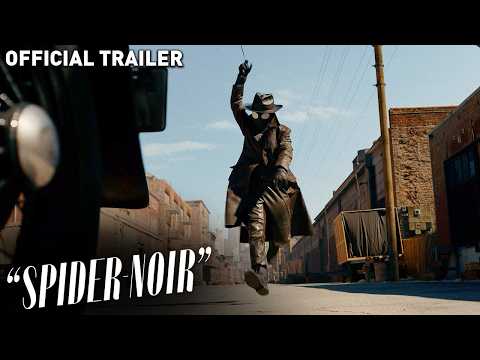
By May 2026, streaming charts were dominated by a project that had initially seemed like a gamble on paper. Spider-Noir, starring Nicolas Cage, is far more than just another superhero cash-grab. It serves as a thorough deconstruction of the genre, meticulously wrapped in the somber aesthetics of the Great Depression.
The 1930s New York envisioned by showrunners Oren Uziel and Steve Lightfoot is entirely devoid of typical superhero polish. This world faces no intergalactic threats. Instead, it is defined by systemic corruption, claustrophobic back alleys, and a private investigator whose primary antagonist is his own past rather than a masked villain. Nicolas Cage, having previously voiced the character in animation, elevates the role to its definitive form in this live-action adaptation. His performance blends the world-weary gravitas of Humphrey Bogart with the sudden, almost primal movements of a spider.
What exactly made this the right moment for such a shift?
By 2026, audiences had grown weary of sprawling, interconnected multiverses. Spider-Noir provides a sense of intimacy and scale. The production utilized period-accurate lenses to achieve a unique depth of field and film grain. This is no mere visual filter; it is a deliberate immersion into an era where morality was as murky as the smoke from a cheap cigarette. Color is used sparingly and with surgical precision to highlight critical clues or looming threats, reinforcing the show's identity as a detective procedural.
The casting of heavyweights like Brendan Gleeson and Lamorne Morris firmly elevates the project from a comic book adaptation to a high-caliber crime drama. This shift suggests a future where studios might favor distinct artistic visions over tired marketing formulas.
Is the industry truly ready to ditch its templates for such atmospheric storytelling? Cage’s success proves that audiences crave complex protagonists who don’t have to save the entire world to remain compelling. Sometimes, the stakes are high enough when a hero is simply trying to clean up a single Brooklyn neighborhood.
The series serves as a prime example of how reimagining archetypes from the past can drive the media technology of the future. The masterful execution of lighting and sound in Spider-Noir is poised to become a blueprint for the next generation of AI tools designed for stylistic video synthesis.


