


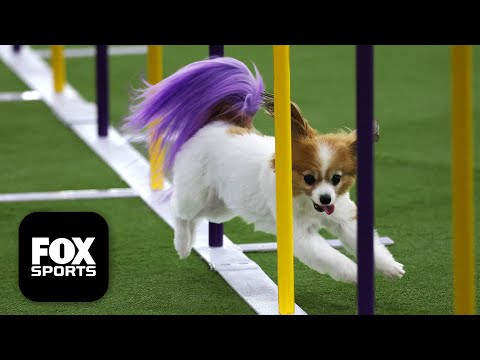
Many still imagine dog agility as a casual weekend hobby, where pudgy pups lazily hop over hurdles in exchange for a treat. However, the broadcasts of the 2026 Westminster Masters Agility finally shattered this stereotype, racking up millions of views across social media. What audiences witnessed at the arena in New York was more akin to Formula 1 racing, featuring high-performance athletes instead of high-tech race cars.
This year’s undisputed champion, a Border Collie named Prove-It, tore through the grueling course without a single fault in just 29.81 seconds. How do these animals manage to carve through tight turns at such velocity while losing almost no momentum?
The secret lies at the intersection of selective breeding, sports biomechanics, and preventative veterinary medicine. Modern preparation for a canine champion begins long before they ever step onto the course equipment. Specialists now utilize advanced analysis of body mass balance and joint load distribution. To execute instantaneous leaps and sharp pivots on fiberglass surfaces, the dog requires a perfect muscular core to stabilize the spine. The training regimens for elite dogs now incorporate underwater treadmills for hydrotherapy, balance platforms, and targeted stretching to ensure ligament elasticity.
Special attention is also paid to the cognitive component of the sport. Neither the handler nor the dog knows the course layout in advance—they receive the map only hours before the starting whistle. Making split-second decisions on the track demands an immense level of mental focus from the dog. The animal must interpret the handler’s micro-signals—a slight shift of the shoulder, a hand gesture, or a specific vocal inflection—while running with a heart rate exceeding 200 beats per minute.
In the long run, this systematic approach is leading to a re-evaluation of pet welfare standards. Methodologies developed for high-performance canine athletes are gradually trickling down into mainstream veterinary care, enhancing the quality of life for everyday city dogs. Injury prevention, proper exercise management, and an understanding of anatomical limits all help extend a pet's active years. Can we say that agility has evolved from a simple pastime into a serious scientific discipline? The results of the 2026 tournament leave no room for doubt.


