


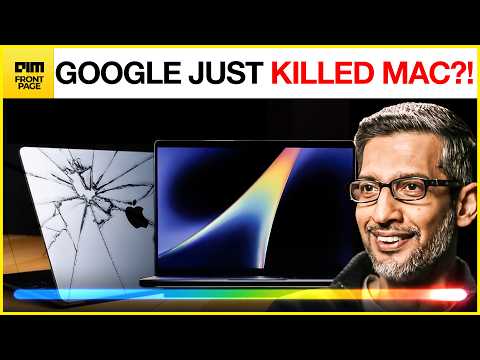
Google has unveiled the Googlebook, a laptop centered around the Gemini Intelligence system integrated with the Magic Pointer feature. The device is positioned not merely as a standard laptop, but as a platform where artificial intelligence is woven into the fabric of daily workflows. Unlike earlier announcements, the focus here is on contextual understanding of gestures and commands, enabling the system to anticipate user intent without explicit instructions.
On a technical level, Gemini Intelligence utilizes a multimodal architecture that merges real-time processing of text, images, and sensor data. The Magic Pointer serves as an advanced tracking mechanism that analyzes finger and cursor movements, integrating them with the context of the active application. In contrast to Microsoft's Copilot+ PCs, which emphasize local processing, the Googlebook appears to rely on cloud synchronization; while this offers greater flexibility, it raises concerns regarding latency and data privacy.
The methodology used to evaluate these new features raises several questions. While the official blog highlights workflow acceleration, it lacks detailed benchmark data for real-world scenarios, such as extended sessions with large documents or heavy multitasking. This makes it difficult to gauge whether the promised improvements remain consistent outside of controlled demonstrations. Furthermore, Google’s approach diverges from Apple’s strategy with Apple Intelligence, which prioritizes entirely local processing to safeguard user data.
Within the landscape of modern AI laptops, the Googlebook occupies a middle ground between purely cloud-based solutions and hybrid systems. While Google's previous models focused on Android ecosystem integration, this release signals a clear shift toward desktop-oriented use cases. Such a shift could influence how developers build applications centered on natural gestures and predictive input.
For the industry, this suggests that competition is moving away from raw processing power and toward the quality of AI integration within the user interface. Independent testing will ultimately reveal whether the Magic Pointer truly reduces cognitive load or merely adds another layer of complexity. Future research will likely concentrate on comparing predictive accuracy across various linguistic and cultural contexts.
Ultimately, the Googlebook demonstrates that the future of laptops lies not in larger screens or faster processors, but in a system's ability to understand context without the need for excessive commands.


