


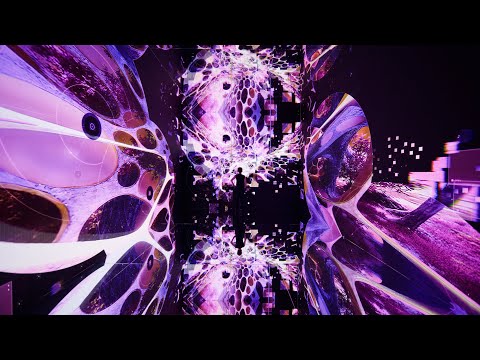
On June 20, 2026, Los Angeles saw the opening of DATALAND, a project that media artist Refik Anadol describes as his lifelong dream. Formally, DATALAND is positioned as the world’s first museum dedicated entirely to artificial intelligence art. Yet, this definition is far too narrow for what the artist actually envisioned. DATALAND was conceived not as a museum in the traditional sense, but as a living ecosystem where data, algorithms, nature, architecture, and humanity converge into a single artistic process. While 20th-century museums focused on collecting and preserving physical art objects, DATALAND works with data, computation, and the ever-shifting states of digital reality.

The project spans over 2,300 square meters within The Grand LA complex, designed by legendary architect Frank Gehry. The choice of location itself is symbolic. Los Angeles has long served as a crossroads for art, cinema, technology, science, and architecture. It is here that a project has emerged claiming to redefine the very concept of a museum in the age of artificial intelligence.

Architect of the Digital Imagination
Refik Anadol was born on November 7, 1985, in Istanbul to a family of teachers. At the age of eight, he taught himself to program on a Commodore 64—an era when computer access was a rarity. He earned his bachelor's degree in photography and video from Istanbul Bilgi University in 2009, followed by a master's in visual communication in 2011. After moving to Los Angeles, he completed a second master's degree in Design Media Arts at UCLA in 2014, studying under media art pioneers Casey Reas, Jennifer Steinkamp, and Christian Moeller.
In recent years, Anadol has become one of the most prominent figures in global media art. His works have been exhibited at major museums and cultural institutions worldwide, with his studio partnering with NASA, Google, NVIDIA, and leading research organizations.
At the heart of his artistic methodology are "machine dreams"—visualizations of massive datasets interpreted by neural networks. However, for Anadol, technology has never been an end in itself. He is interested in creating new modes of perception where data becomes an artistic medium and algorithms serve as tools to expand the human imagination.
He views artificial intelligence not as a replacement for the artist, but as a co-author and a mirror of sorts for humanity, capable of revealing new ways to understand the world and ourselves.
A Dream Realized
DATALAND did not appear out of thin air. It can be seen as the culmination of nearly two decades of research by Refik Anadol at the intersection of art, science, and computational technology.
All his previous projects—from his famous "machine hallucinations" to large-scale public installations on building facades and in museum spaces—were stepping stones toward a single goal. Anadol has long sought to create a place where artificial intelligence ceases to be just an artist's tool and becomes part of the artistic environment itself.
A place where data can exist as a form of memory, algorithms as a creative force, and the visitor as an active participant in the unfolding experience.
In this sense, DATALAND is not just another project from the Refik Anadol Studio. It is the physical manifestation of an idea that has been taking shape throughout his entire career.
From Exhibition to Institution
The museum's inaugural exhibition, "Machine Dreams: Rainforest," spans five galleries. Its concept grew out of Anadol’s travels to the Amazon rainforest and meetings with members of the Yawanawá people. The exhibition offers more than just an immersion into images of nature; it is a full multisensory experience where light, sound, scents, environmental data, and digital visions weave into a single living system that responds to every visitor.
Each visitor is provided with wearable biosensors that track heart rate, skin temperature, and other physiological metrics. This data becomes part of the artwork—the exhibits shift and change in response to the audience's emotional state. In the central Infinity Room, three-dimensional worlds are constantly transforming, as if the space itself is breathing in sync with the visitors.
This represents the primary ambition of the project. DATALAND is more than just a museum for AI art or another immersive exhibition. It is an attempt to create a new kind of cultural institution where artificial intelligence is integrated into the museum's infrastructure, the artistic process, and the space itself.
Exhibits here do not exist in a finished state. They are constantly being reassembled under the influence of data, algorithms, and the presence of the audience. In this regard, DATALAND more closely resembles a living ecosystem than a traditional collection of art pieces.
While traditional museums collect artifacts of the past, DATALAND works with a different type of memory—data memory. Millions of images, sounds, ecological observations, and scientific records serve as the raw material for continuously evolving works of art. In this sense, the museum serves an archival function as much as an artistic one, preserving the digital footprints of the world around us and transforming them into a new cultural experience.
AI Ethics at the Core of the Project
Beneath the technological novelty lies a deeper question: can a museum built around algorithms change our very understanding of authorship and artistic value?
Amidst growing debates over copyright, the ethics of generative AI, and the provenance of data, Anadol has proposed a path that diverges radically from standard industry practices. Instead of obscuring sources, he has placed his bets on transparency.
The studio developed the Large Nature Model (LNM)—one of the first open-source generative models trained exclusively on data from the natural world. It was trained on millions of images and sounds of flora, fauna, and fungi sourced from scientific archives, museum collections, and field research.
The model was created in collaboration with the Smithsonian Institution, the Cornell Lab of Ornithology, the Natural History Museum, National Geographic, and other leading scientific organizations.
At the heart of the project lies the philosophy of permission-based AI—artificial intelligence trained only on data that has been used with clear consent and transparency. This is not merely a technical solution, but a principled stance. Anadol is convinced that AI should learn from nature and help explore it, rather than endlessly reproducing human-created content.
Living Participation
The primary difference between DATALAND and a traditional museum is that the visitor ceases to be a mere spectator. They become a participant whose presence literally influences what is happening.
The entire space is constructed as a responsive ecosystem. Biosensors track the physiological data of visitors, spatial scanning systems capture movement, and interactive interfaces receive commands. Visual worlds transform in response to the audience's energy.
In this sense, DATALAND blurs the boundaries that the classical museum has carefully maintained: the line between the author, the work, and the viewer. Every person walking through the exhibition becomes a co-author of a piece that will never be repeated exactly the same way twice.
This is a form of collective creativity that was practically impossible before the advent of real-time technologies and machine learning.
A Historic Moment for Art
Art history has faced similar turning points before. When photography, film, video art, and digital technology first entered museum spaces, critics invariably asked the same question: is this art, or just a new technique?
Over time, each of these forms has found its place in culture.
Today, similar discussions are unfolding around artificial intelligence. However, DATALAND suggests looking at the issue from a broader perspective. It is no longer just about whether a machine can create images. The question is whether artificial intelligence can become a new cultural environment within which artworks emerge, viewer experiences are formed, and the very role of the museum is reimagined.
If the 20th-century museum was a storehouse, the 21st-century museum could become a living computational system, pulsing to the rhythm of human presence.
Dialogue with the Planet
DATALAND has the potential to accelerate the institutionalization of AI art while simultaneously intensifying fundamental debates about the nature of creativity in the age of machines.
Yet, perhaps the project's most important question lies in a different dimension.
If nature's data becomes artistic material and algorithms become tools for their interpretation, then art ceases to be an exclusively human monologue. It transforms into a dialogue between humans, machines, and the environment—an attempt to hear the memory of ecosystems, preserve knowledge of vulnerable biomes, and find a new language for interacting with the world.
Therefore, DATALAND is not just the first museum of AI art. It is one of the most ambitious cultural experiments of our time, an attempt to redefine what a museum can be in an age when machines can see, hear, and interpret the world in ways that recently seemed uniquely human.
In the heart of Los Angeles, Refik Anadol has realized a dream that has followed him throughout his career: to create a space where art, data, technology, and nature exist not as separate entities, but as a single living system.
This is why DATALAND should be viewed not only as the first museum of AI art but as one of the boldest cultural projects of the 21st century.


