


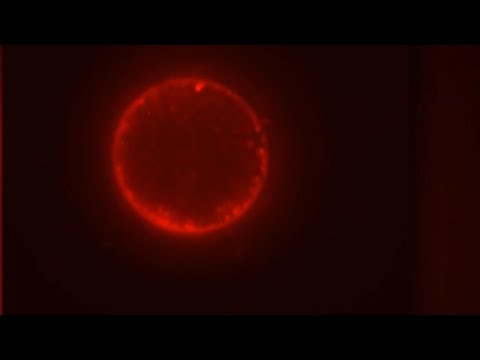
At the University of Minnesota, researchers have developed a synthetic cell system that integrates several fundamental processes characteristic of living cells: resource acquisition, growth, genetic replication, and division.

This unique construct was named SpudCell—a play on the word "spud" (potato) due to its tuber-like shape, and a reference to "Sputnik," a symbol of technological breakthroughs and the dawn of a new scientific era.
It is crucial to understand, however, that SpudCell is not yet a fully living organism. It is an engineered model made from known molecular parts that allows scientists to explore the boundary between complex chemistry and biology.
Previously, researchers were only able to replicate individual functions of living systems, such as protein synthesis, cellular growth, or DNA replication. The primary challenge remained integrating all these distinct processes into a single, cohesive system.
SpudCell represents a major step forward in overcoming that specific hurdle.
How SpudCell is Structured
The system is built upon PURE (protein synthesis using recombinant elements) technology, which acts as an artificial molecular factory. It utilizes purified enzymes, ribosomes, and other components to read DNA and produce the necessary proteins.
This entire mechanism is enclosed within a lipid membrane, an outer layer mirroring that of a real cell.
Inside lies a small, synthetically organized genome of roughly 90,000 base pairs. It is divided into separate DNA molecules that function like interchangeable parts, each responsible for a specific system task.
Nutrition and Growth
To facilitate growth, SpudCell utilizes small lipid vesicles to transport essential nutrients.
The system produces specific surface proteins. These act as "molecular docks," attracting these nutrient-rich vesicles and facilitating their fusion with the cell.
Through this process, SpudCell acquires the building blocks necessary to expand its size and replicate its DNA.
The Division Process
While real cells rely on complex protein machinery and a cytoskeleton to divide precisely, SpudCell uses a different method.
The creators found a more streamlined engineering approach: they manipulate the physical properties of the membrane rather than using internal architecture. Specific surface proteins cluster together to create mechanical tension, causing the droplet to split into two parts.
This allows the system to replicate one of life’s core processes—division—without needing full cellular complexity.
Early Signs of Selection
One of the most intriguing experiments involved modifying the internal properties of SpudCell.
When researchers introduced changes that enabled the system to capture nutrients more effectively, these variants grew faster and gradually outcompeted the original forms.
This process mirrors natural selection, where a more efficient system gains a competitive edge. However, this currently takes place within a controlled laboratory environment rather than as the autonomous evolution of a living organism.
Technological Constraints
Despite its success, SpudCell is still in the early stages of development.
After a few cycles of division, daughter cells often lose critical parts of the genome; additionally, the system cannot yet self-produce all its components, such as the ribosomes needed for protein synthesis.
Consequently, SpudCell still depends on external support and specific laboratory conditions to function.
The researchers emphasize that this is a proof of principle rather than the creation of a new life form.
Why This Matters
The true achievement of SpudCell isn’t that scientists "created life," but that they successfully integrated several key cellular processes into one controlled chemical platform.
This breakthrough opens new doors for the field of synthetic biology.
In the future, these artificial cell platforms could be used to produce medicine, develop eco-friendly materials, create clean technologies, or even study how life first emerged on Earth billions of years ago.
Conclusion
SpudCell is far more than a simple engineering experiment; it is a landmark achievement in our quest to understand life itself.
The system proves that processes typically reserved for living organisms—growth, replication, division, and competition—can be simulated using known molecular components.
It brings us to the very edge of chemistry and biology, helping to answer a fundamental question: when does a group of molecules become a living system?
While the current version of SpudCell remains fragile and dependent on external resources, its value lies in demonstrating that the basic building blocks of life can be assembled and programmed.
Much like the Wright brothers' first flight or the launch of the original Sputnik, SpudCell marks the beginning of a journey rather than a final destination. It points the way forward for the next generation of engineers, biologists, and researchers.
With open-source initiatives like Biotic, progress in this field will likely accelerate and become more accessible. We may be witnessing the dawn of a new era in synthetic biology—a time when cells are designed as precision tools for medicine, science, and the future of humanity.


