


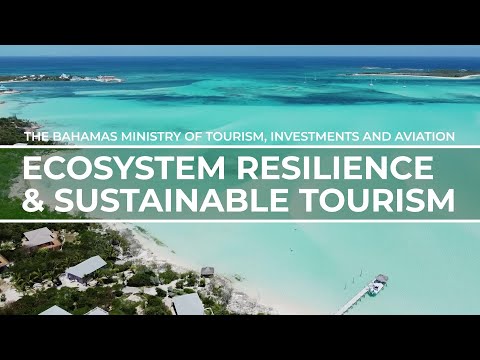
The Margaritaville Beach Resort in Nassau recently hosted the finale of the UN Tourism Sustainable Islands Innovation Forum and Bahamas Startup Challenge, the Caribbean's first-ever competition for sustainable tourism solutions. This event marked a significant milestone for the region, as the Bahamas—one of the world's most recognizable tourism brands—openly addressed how to preserve its natural wealth amidst record-breaking visitor numbers. The finale featured addresses from Bahamas Deputy Prime Minister Chester Cooper and UN Tourism Executive Director Natalia Bayona. The audience brought together international investors, UN experts, and Bahamian startup representatives to forge a new tourism model. This vision aims to ensure that economic gains do not compromise the preservation of the Bahamas' unique environment—its turquoise waters, white sands, and rare biodiversity—while securing sustainable development for future generations.
Why it matters: An unavoidable vulnerability
Roughly eighty percent of the Bahamas' landmass sits less than 1.5 meters above sea level, making the archipelago one of the most climate-vulnerable places on Earth. Hurricanes, rising sea levels, and ocean acidification directly threaten the very attractions that draw tourists here: coral reefs, mangroves, and beaches. For instance, Andros Island is home to one of the world's largest barrier reefs, stretching approximately 306 kilometers. This is not just abstract ecology. It is quite literally the reason why travelers book tickets to the Bahamas.
Tourism is the backbone of the Bahamian economy, and it is precisely the record visitor numbers that turn the sector into both a primary growth engine and a source of vulnerability, according to UN Tourism Executive Director Natalia Bayona. This paradox led to the launch of the Sustainable Islands Challenge, a competition officially announced in Lima in August 2025 by the Bahamas Ministry of Tourism in partnership with UN Tourism and the local innovation hub Innovate 242. The goal was to find entrepreneurs capable of creating tangible solutions—viable business models rather than mere declarations.
The competition: Three challenges, six finalists, one winner
The Sustainable Islands Challenge accepted applications in three categories: ocean and marine ecosystem protection, local and community-based tourism, and green technology for sustainable development. Winners receive acceleration programs, while all finalists gain access to the UN Tourism Global Innovation Network and mentorship from the Tourism Development Corporation of the Bahamas.
Bluequest Bahamas monitors and protects the marine environment using advanced sensors, acting as a real-time early warning system for threats to coral reefs and fish stocks.
Access Island Guide is a platform that helps tourists find and book services from local operators, focusing on small family businesses rather than large hotels that would otherwise remain invisible to visitors.
The Out Island Water Company Recycling Program is an innovative water recycling system for the archipelago's remote islands where freshwater access is limited. It won the "Green Technology" category and received the overall prize as the competition's best project, founded by Trevor Williams.
According to an official statement from Hospitality Net, the competition was created to recognize the emerging startup ecosystem while stimulating more active collaboration among Caribbean nations, attracting investment, and strengthening public-private partnerships.
"This competition demonstrates how small island states can lead a global transformation of tourism through innovation," stated Chester Cooper, the Bahamas' Deputy Prime Minister and Minister of Tourism. "By supporting local entrepreneurs, the Bahamas is intentionally building an innovation ecosystem that turns our vulnerabilities into long-term competitive advantages."
Current developments across the islands
The Sustainable Islands Challenge is part of a broader environmental transformation the Bahamas is pursuing on several fronts. The Nassau Cruise Port, the country’s primary cruise gateway, underwent a $300 million overhaul and reopened in its new form in May 2023. Among its new initiatives is the annual International Coastal Cleanup, which engages volunteers to clear debris from shores throughout the archipelago.
On Grand Bahama, Coral Vita operates a commercial coral farm that grows twenty species of native coral using technology that accelerates growth by 50 times and boosts resilience to rising temperatures and acidity. This work is tied directly to tourism, as healthy reefs attract the divers and snorkelers who represent a significant portion of the visitor traffic to many islands.
The Caribbean flamingo, the national bird of the Bahamas, has seen its population rise from just 5,000 in the 1950s to its current healthy numbers as a direct result of conservation programs. Today, the flamingos on Inagua Island represent one of the archipelago's top natural wonders and a major draw for eco-tourists. Meanwhile, the Mission for Mangroves program is restoring Grand Bahama's mangrove forests, which were devastated by the Category 5 Hurricane Dorian in 2019. In early 2026, the Nassau Cruise Port and the Bahamas National Trust announced a three-year partnership, with the port committing $75,000 to conservation campaigns and national park management.
Why this redefines the travel experience
The Sustainable Islands Challenge is the first Caribbean competition of its scale. If it yields tangible results, its model will be scaled to other small island developing states where tourism is both the main revenue source and a major threat to ecosystems. This applies to dozens of nations across the Caribbean, Pacific, and Indian Oceans facing the same dilemmas as the Bahamas.
For the traveler, this translates into specific changes in how a trip to the islands looks. The Access Island Guide platform offers direct access to local operators on the Out Islands who know every reef and cove intimately. Coral Vita invites tourists to join reef restoration programs alongside diving tours. Mission for Mangroves offers excursions that include planting mangrove trees. The Reef Rescue Network provides five distinct programs for snorkelers and divers to participate in live restoration projects.
This shift reflects what the industry calls "meaningful travel"—a journey that leaves behind more than it takes. Based on the developments seen in May 2026, the Bahamas is becoming a primary global testing ground where this concept evolves from a marketing slogan into the actual architecture of the tourism industry.
Travelers have always visited the Bahamas for its beauty. Now, the country is also building the systems necessary to preserve that beauty. These are two distinct concepts, and it is the latter that makes the former possible for the future.


